
Under the Boot: Predictive Coding and Gender Distress
Connecting gender distress with the mind-body paradigm

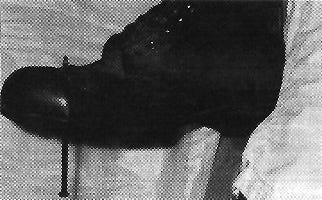
In 1995, a construction worker was rushed to the hospital after his boot was impaled by a gargantuan 15 centimeter nail. He was in agonizing pain. Then, something strange: when doctors cut off the boot they discovered that the nail had pierced between two toes, leaving him unscathed--not a scratch. The pain vanished instantly.
This story seems absurd until you understand the neuroscience concept of predictive coding: the brain’s ability to act as a prediction machine, rather than merely a passive recorder of reality. While scientists previously thought that pain was exclusively generated in a bottom-up fashion involving nociception (damaged tissues sending messages to the brain to create pain signals), modern research has revealed that this relationship is in fact bidirectional. In other words, pain is not merely a report of injury, but the result of a brain continuously generating its best guess by filtering incoming signals through what it already knows about threat, safety, and meaning.
Pain science is beginning to be quietly revolutionized by this insight, allowing a new cohort of people to become agents of their own healing outside of the biomedical paradigm. Unfortunately, this understanding has not yet solidified into conventional practice of pain medicine, with doctors still relying near-exclusively on structural findings to determine the cause of chronic pain. (For those unfamiliar with this concept, an annotated bibliography of research on psychophysiological conditions from this knowledge base can be found here.)
The construction worker’s pain made perfect sense and was the result of a brain behaving in its normal and healthy way. His brain saw what looked dangerous and assigned a probability: a scary-long nail through a boot equals tissue damage. It set off the alarm: pain.
If this critical misunderstanding--which creates years of disability, medical shopping, hopelessness, and failed interventions--is unfortunate, its extension into gender medicine is tragic.
Gender-related distress is often treated as if it can mean only one thing: that the body is wrong. When distress is explained exclusively as an organic flaw that must be corrected physically, medicine becomes uninterested in deeper etiological questions. This is a disservice to the complexity of our humanity and is ultimately harmful to people seeking a fix that’s beyond skin-deep.
It is easy to speculate why the construction worker’s brain would predict that he needed a danger signal (pain) to bring attention to his foot: the combination of visual input (seeing his boot impaled) and the probability of the scenario (unlikely that it would go between his toes). Additionally, maybe the horror from his coworkers amplified his reaction (social signaling).
But in the absence of structural pathology, why would someone’s brain feel the need to medically alter a sexed body?
To answer this question, it’s important to understand the idea of the symptom pool, a label introduced by medical historian Edward Shorter to describe the way different symptoms are unconsciously picked by sufferers based on what is culturally legitimate at the time. Think of psychophysiologic conditions as the result of your brain going out to eat at a restaurant with a seasonal rotating menu.
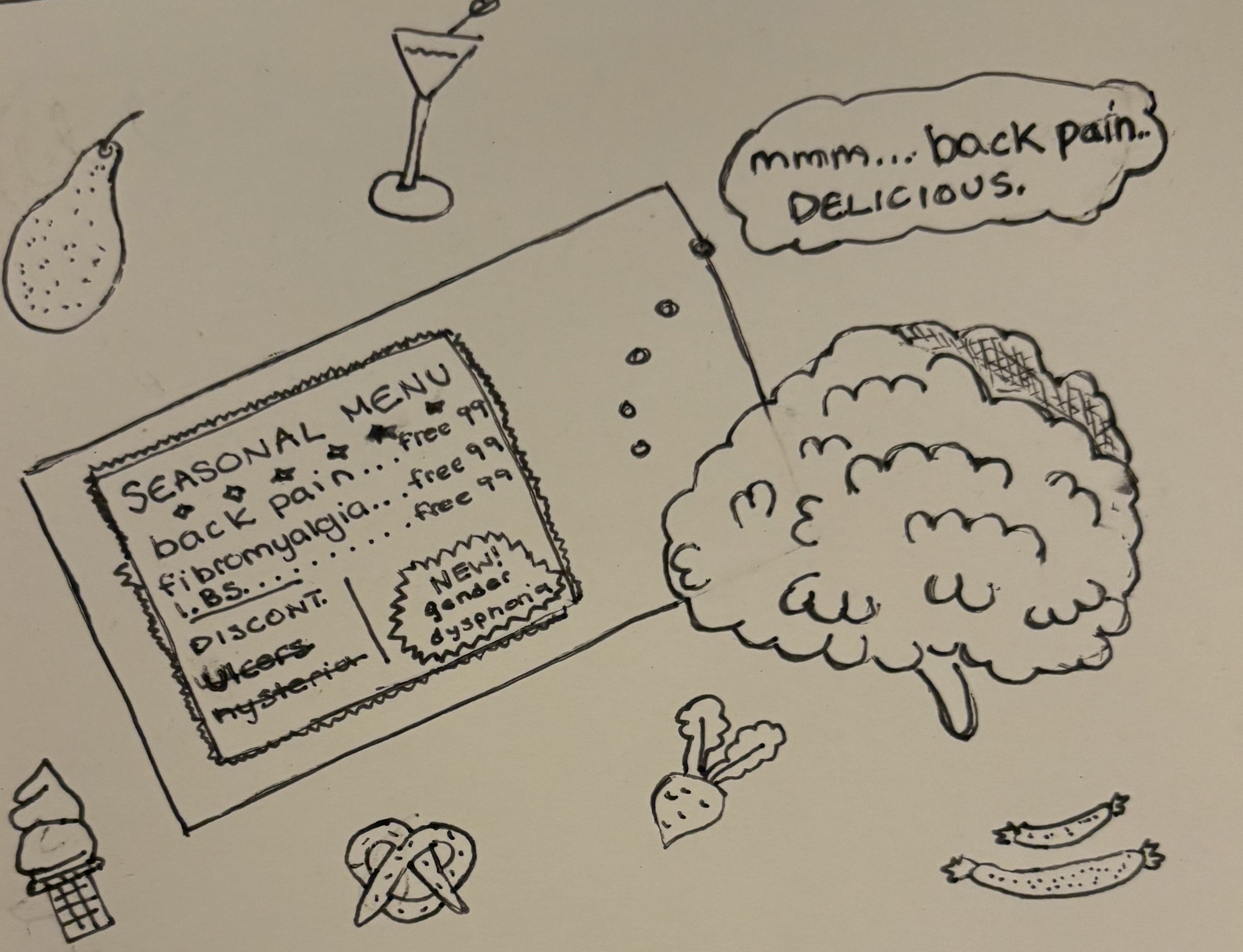
In the season of the late 19th to early 20th centuries, hysterical blindness was à la mode. In the mid-20th century, ulcers were a favorite pick of many-an-overwhelmed-brain. The end of the century brought back pain, which continues to be popular. Today, gender distress has surged into prominence as an increasingly available and culturally legible form of distress-- especially among the young, though not exclusively.
As with any symptom, there are harbingers or early cases that act as innovators before a surge in popularity. You can think of these brains as working in the test kitchen, trying out new recipes to see if they stick.
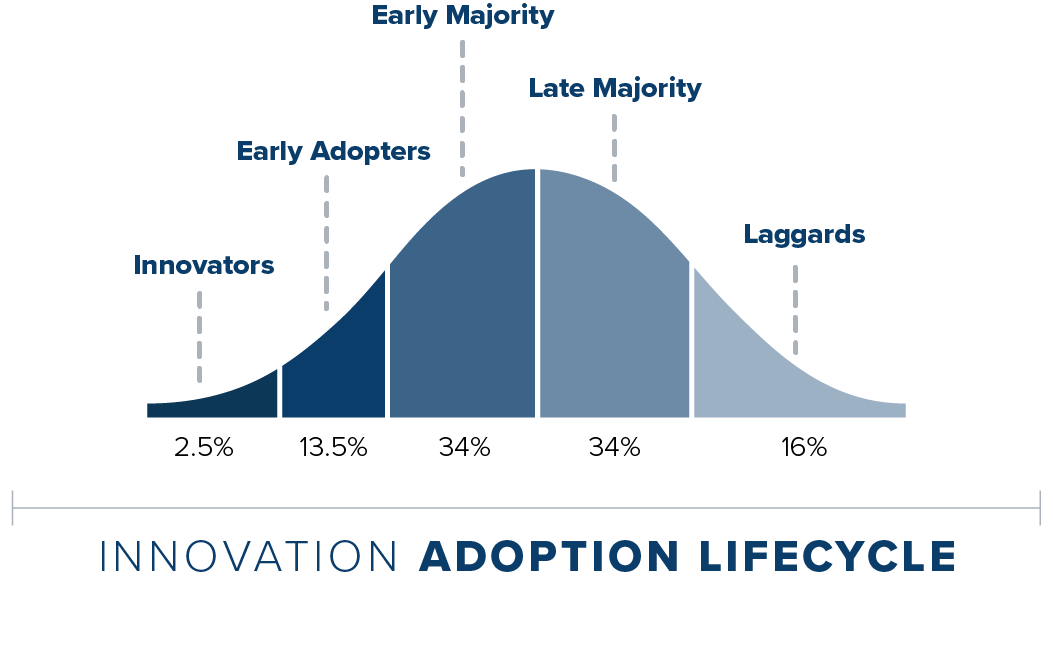
Because of the sociocultural element of these disorders, popular media can catalyze the proliferation of symptoms and shape their cultural expression. For example, before the globalization of anorexia nervosa, the disorder had a culturally unique presentation in China. Innovators of Chinese atypical anorexia didn’t have a fear of fatness nor a misperception about their size, but the publicization of an afflicted Chinese girl’s death introduced the Western presentation of the disease seen in China today. Like any psychophysiological condition, the suffering was the same even if the form it took on changed to maintain its cultural saliency.
This makes homogenizing standards--like those provided by the trans healthcare organization WPATH--particularly catastrophic. (If you’d like to learn more about WPATH, I strongly recommend Mia Hughes’ piece.)
Because cultural legitimacy is relevant here, good intentions to spread awareness can look more like spreading symptoms in practice. If it were true that gender distress is the result of something wrong with the body or brain, information dissemination could do no harm. However, if we take predictive coding seriously and admit the brain is making meaning-based best guesses from a soup of inputs, including sociocultural legitimacy, we understand the true danger at stake.
Psychophysiological disorders work as a defense mechanism. This defense is strengthened the more culturally salient and physical the symptoms appear. Why? Because the most effective symptom, to the unconscious brain, is one that’s taken seriously by both the sufferer and the observer.
John Sarno, a pioneering back pain doctor whose work focused on understanding the mind-body connection in chronic conditions, wrote the following about psychophysiological pain: “the purpose of a physical manifestation of tension is to deceive,” or to be interpreted as structural in origin.
Thus, interpreting internal distress as a structural truth can reinforce a defensive strategy, making the pattern even harder to exit. As long as this defense is doing its job, the individual is blind to what’s lurking behind the curtain: the messier, unconscious forces necessitating a need for the defense in the first place. Now, this individual is cut off from any sustainable, meaningful resolution to their distress.
The core problem is that gender distress is now treated as the most literal, unquestionable truth about the self-- so literal that the proposed solution is invasive bodily modification. As deeper etiological questions become more taboo, the brain’s initial predictions solidify into binds plaguing more and more sufferers.
It is tragic.
Fortunately, there is a way out on a population scale: the symptoms menu changes when the deception stops working. We will start seeing a decline in gender distress and trans identification once it becomes apparent that it is, in fact, a signaller for deeper distress--one deeply entwined, as one might expect, with an individual’s sense of identity.
As ulcers faded once their psychophysiologic nature became widely understood, so too will gender distress when it becomes apparent that it functions as a defense of something deeper--something that cannot be medicalized away. When we’re truly understood, our brains can predict safety instead.
A Call to Action:
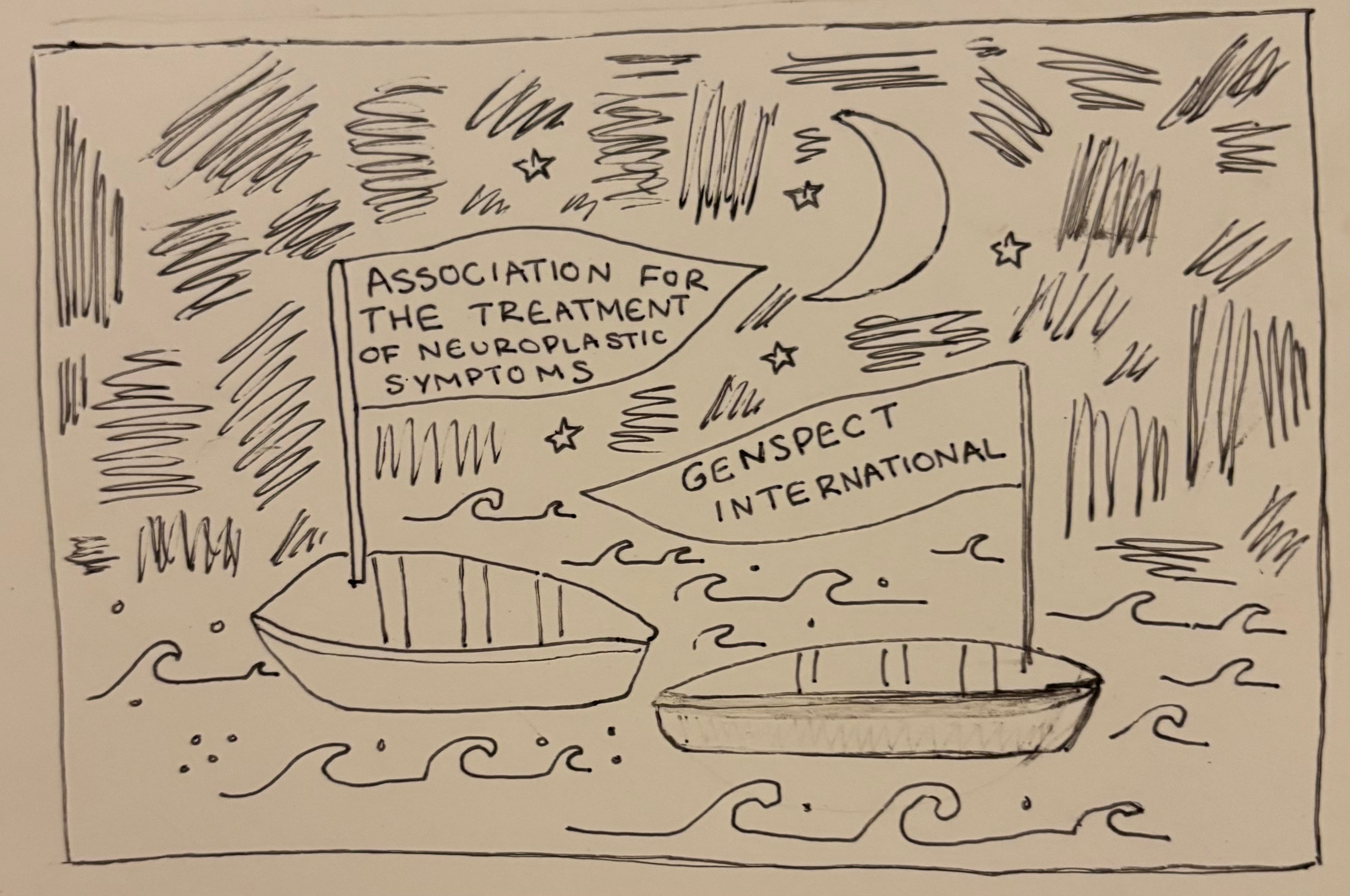
Two professional circles have been speaking about this same short-sighted medical approach from different silos. Both advocate for a psychological approach to disorders currently viewed being treated through invasive medical treatments that lack appropriate evidence and often cause patient harm. One (e.g. Genspect International) focuses on gender distress, while the other (e.g. Association for the Treatment of Neuroplastic Symptoms) focuses on chronic pain, fatigue, and other mind-body illnesses.
Despite their parallel missions, these forward-thinking advocacy groups have yet to share ideas. Working together could serve as a huge catalyst in the progression of the aims of both movements to treat disorders with a psychological origin through evidence-based, non-medically invasive means by aiming to understand the whole person.
Thank you SO much for reading my first Substack article! If you have any feedback or questions for me, I’d be really appreciative if you share them below :D
Interesting 🤔
Thank you for this informative and thoughtful approach. More information on the Association for Treatment of Neuroplastic Symptoms can be found here: www.symptomatic.me .